Tuesday, July 12, 2011

Funny photo I came across yesterday in a public toilet in Yogyakarta, Java, Indonesia.


Not as stupid as it looks, as on another occasion on the same trip I did go into another public toilet and find dirty shoemarks on the toilet seat!

For more on our trip to Indonesia please click here.

To see a Korean toilet etiquette bell click here.

Here's a picture of the Korean 'toilet house', and another amusing toilet picture I took on the Koryo Air flight back from North Korea (scroll to the end).

Monday, July 11, 2011

We started our two-week trip to Indonesia in Jakarta. 'The Big Durian' is Jakarta's unofficial nickname, supposedly given to it by expats because it's spiky and smelly on first glance, but warm and delicious once you get to know it. (I can certainly confirm the smelly part of the description!).


Arriving late at night we started our visits the next day with Indonesia's National Museum, also known as the 'Elephant Museum' by the locals as it has a statue of an elephant outside (which you can just see to the right on this photo).


part of the museum's stone sculpture collection

One of the museum's centrepices is a 4-metre tall stone sculpture of Aditawarman, a 14th century nobleman:


notice the ring of skulls on which he is standing

Opposite the museum is a park called Merdeka Square, in the middle of which is the towering Monas, (aka National  Monument), built by  President Soekarno in the 1960s, and probably Jakarta's main landmark.

the 132-metre high Monas

lunch! (chicken noodles)

Jakarta Roman Catholic Cathedral

some friendly security guards


The statue below is the West Irian Liberation Monument, erected to celebrate the liberation of this province from Dutch imperalism. This region is now known as West Papua, and is the western half of the island of New Guinea. However an independence (from Indonesia) movement is active.


The Gedung Pancasila building is famous as the place where Soekarno paved the way for Indonesia's constitution following a 1945 speech there.


frog? toad?

On our second day we went to the old port area of Sunda Kelapa, which is full of pinisi, traditional two-masted wooden ships.

pinisi
 
kids, Sunda  Kelap
 
Sunda Kelapa

A landmark of the area is the old watchtower, built by the Dutch, built in 1839.


There's not much to see inside, but you get a good view from the top, as you can see from the following photos.


Looking north from the watchtower

After Sunda Kelapa we visited Kota, the old part of Jakarta (which was known as Batavia under Dutch rule), whose central square is Taman Fatahillah. Here's  the old town hall, now a history museum:


After we left Jakarta we flew to Yogyakarta for the next step of our trip.  After that we travelled to Pulau Weh (Northern Sumatra) for a week of scuba-diving.


Suggested reading :

Krakatoa: The Day the World Exploded: August 27, 1883 by Simon Winchester. As the title says, an account of the eruption of Krakatoa, situated between Java and Sumatra. The author brings to life the drama, the people and the science behind the eruption in an interesting way.

Monday, July 4, 2011

I'm in the process of moving from South Korea back to Reunion Island in the Indian Ocean (travelling via Indonesia), so blog posts will be thin on the ground or non-existent until I'm settled again at the end of August.
See you then !

Wednesday, June 22, 2011

We've just spent the third and final of the three two-night stays we'd won in Park Hyatt hotels at the Tokyo hotel, famous as the hotel where the film Lost in Translation is set.

Park Hyatt Tokyo

The room was very luxurious as can be expected, with much attention to detail, even the Q-tips (cotton swabs) were individually wrapped.

our room, 47th floor

As we were on the 47th floor at over 200 metres above sea level the views were fantastic. To the south east we could see the Meiji Shrine complex :


view towards south-east from our room

and to the north-east the Tokyo Metropolitan Government complex (far left in the photo) which has observatories on the 45th floor.

view north-north-east from our room

view east-north-east

close-up, Mode Gakuen Cocoon Tower

NTT Docomo Yoyogi building

publicity airship

The gym was also on the same floor and the views were great if you were on a treadmill !

The first night we had dinner in an izakaya in Shinjuku, the area where the hotel is located. We didn't have the stir-fried hormones on the menu though !


Afterwards we wandered round Kabukicho which is an entertainment district near Shinjuku station with many restaurants, bars, and nightclubs. 

club in Kabukicho

Kabukicho street

Kabukicho street

The next day after breakfast,

breakfast is in the Girandole restaurant

we headed to the Ginza/Hibiya area, and walked through Hibiya Park


We also saw a demonstration nearby, but not being able to read Japanese we don't know what they were protesting about.


That night we had dinner in the New York Grill restaurant. We went back next morning to take some photos as the light was better at that time of day.


I don't think we've been to any Asian city without going to its Apple store.  On this trip we went to both the Ginza and Shibuya stores !

Shibuya apple store


Then we wandered back to the hotel via Omotesando.


You can read about our two-week trip round Japan by rail in April 2010 here.

Here's the post about 48 hours in Shanghai, the first of the three two-night stays we won in Park Hyatt hotels.

Suggested reading:


Out: A Novel by Natsuo Kirino is about four women who work the night shift in a Tokyo bento box factory, and who find their lives twisted beyond repair. This grim crime novel won Japan's top mystery award, the Grand Prix.

Tokyo Fiancee by Amelie Nothomb. A complex story of first love set in late 1980s and early 90s Tokyo. Amélie is a 21-year-old Belgian student studying Japanese in Tokyo when she begins tutoring Rinri, a sweet, shy and wealthy 20-year-old, in French. The relationship quickly evolves into a friendship and, soon after that, into romance.

Monday, June 13, 2011

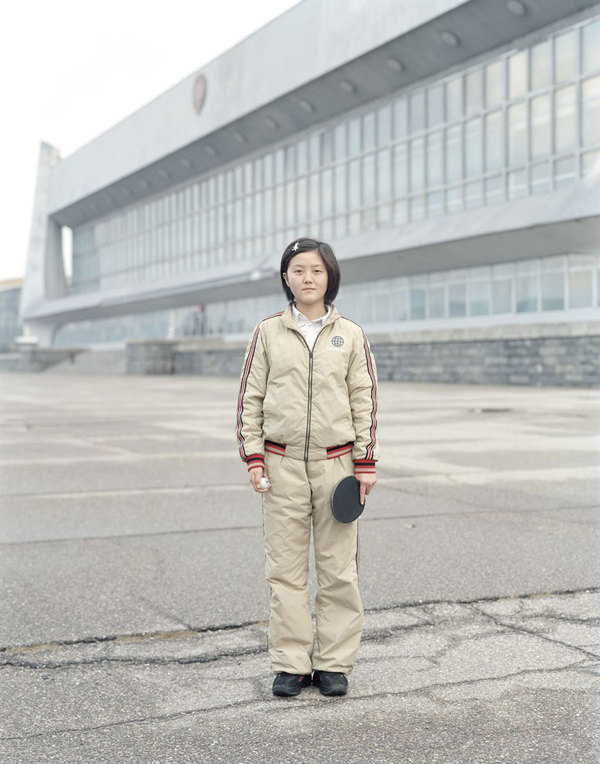
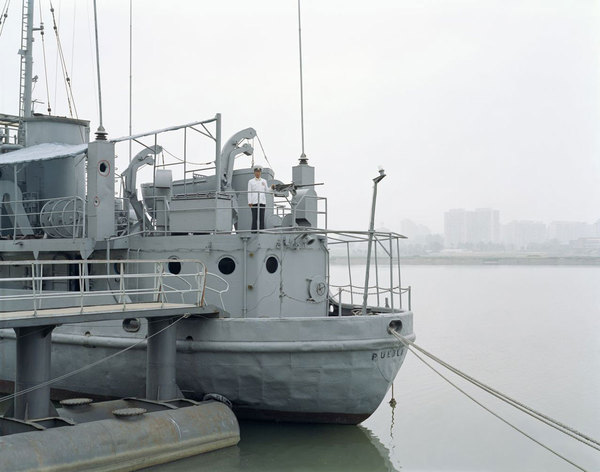
Charlie Crane is an advertising and editorial photographer in the UK. But his most stunning work is a personal project that he shot a few years ago, in North Korea’s capital city.

“If there is no possibility of getting underneath the surface then the answer was to photograph the surface itself,” Crane writes in his artist statement. In other words: “Photograph what they want you to see.” Crane’s North Korean minders couldn’t have guessed that the resulting images would depict such a sterile, empty city. Save for a handful of people—who are almost invariably shot alone, against static backgrounds that make them look like department-store mannequins—Pyongyang looks totally abandoned. (You’d think the neutron bomb had just hit.) And yet these photographs are chillingly beautiful, and all the more poignant for the suffering they somehow manage to exclude from the frame.


Check out some photos from Charlie Crane’s “Welcome to Pyongyang” series or see more of the photos on Crane’s website.

Other photographers with arresting photos of North Korea, particularly the Mass Games, are Sam Gellman and Werner Kranwetvogel.

via Very Short List.

You can read about my own trip to the DPRK here.