Thursday, September 22, 2011


Here are some facts about Reunion which you might not know:

- With a drop of 725m Reunion's Trou de Fer is the world's 21st highest waterfall.

Trou de Fer waterfall (source)

- In 1841, Edmond Albius, a 12-year-old slave who lived on  Réunion, discovered vanilla could be hand-pollinated (hand-pollination allowed global cultivation of vanilla).

Edmond Albius in 1863, aged 34 (image Wikipedia)


- Reunion has the world records for the most amount of rainfall for the following periods:
  • 9 hours: 1.087 metres (Belouve, 1964)
  • 12 hours: 1.144 metres (Foc-Foc, 1966)
  • 18.5 hours: 1.689 metres (Belouve, 1964)
  • 24 hours: 1.825 metres (Foc-Foc, 1966)
  • 2 days: 2.467 metres (Aurère, 1958)
  • 3 days: 3.93 metres*
  • 4 days: 4.87 metres*
  • 5 days: 4.98 metres*
  • 6 days: 5.07 metres*
  • 7 days: 5.40 metres*
  • 8 days: 5.51 metres*
  • 9 days: 5.51 metres*
  • 10 days: 5.61 metres
  • 11 days: 6.299 metres
  • 12 days: 6.401 metres
  • 13 days: 6.422 metres
  • 14 days: 6.432 metres
  • 15 days: 6.433 metres
* Figures recorded at Commerson Crater during Cyclone Gamede in February 2007, one of the wettest tropical cyclones on record. The records for 10 to 15 days were also recorded there in January 1980.

While not world records, here are the local precipitation records for shorter periods of time:
  • 1 hour: 261mm (Cilaos, 1964)
  • 3 hours: 422mm (Mare à Vieille Place, Salazie, 1998)
  • 6 hours: 687mm (Mare à Vieille Place, Salazie, 1998)

Sources : Australian Govt. Bureau of  Meteorology, Météo France and Dr Jeff Master's blog on Weather underground.

cyclone Gamede

- On 24th March 1613, the English ship "The Pearl" stopped at the island and the ship's captain Samuel Castleton called the island England’s Forest, as he found the island to be particularly woody (although according to some accounts it was a pirate known as Blackwelle and not Castleton).

- Reunion is Europe's leading producer of sugar, and the world's 7th (see here).
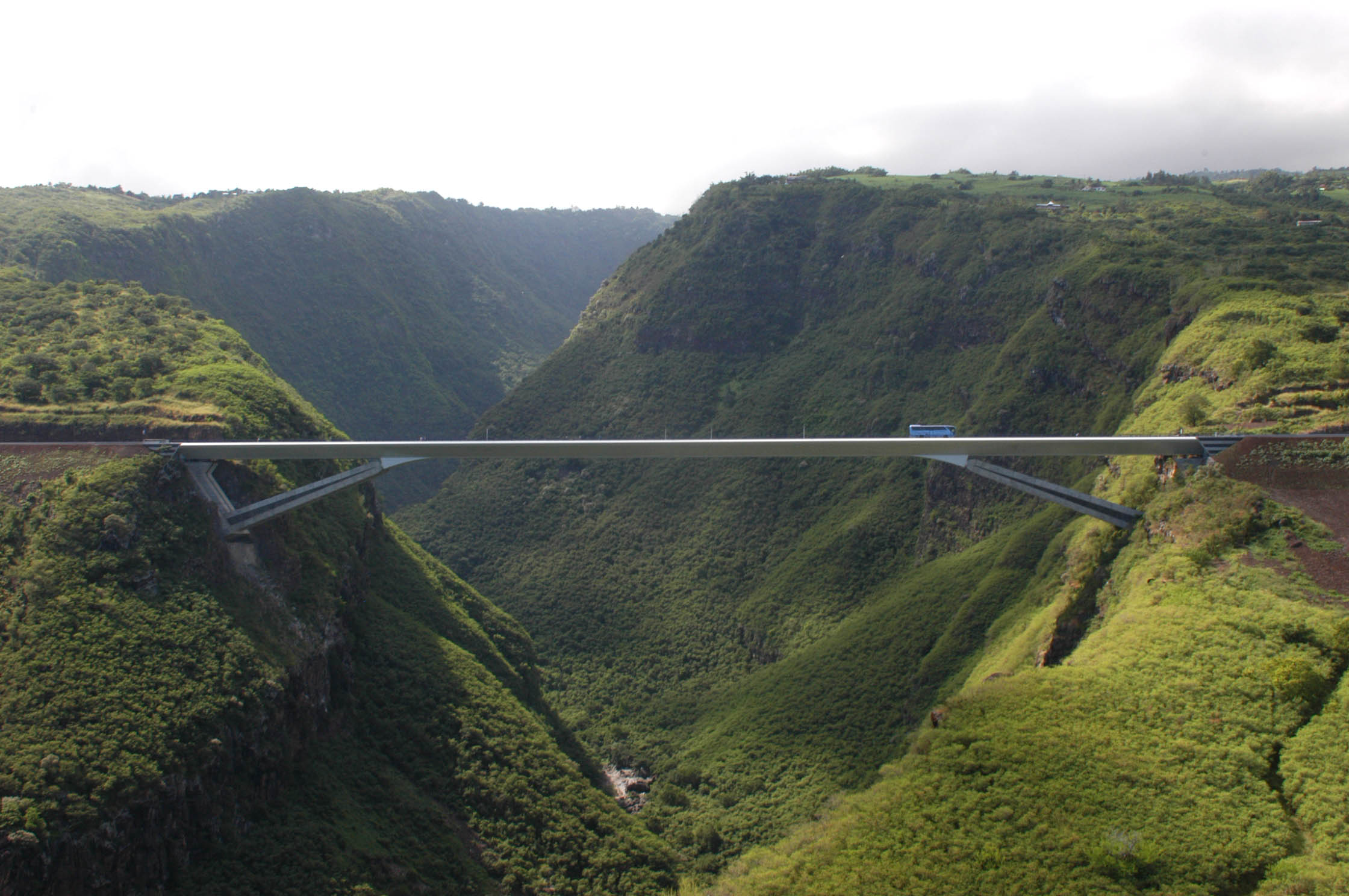

Grande Ravine Bridge, Trois Bassins (photo highestbridges.com)

- Reunion was the first place in the world to use the Euro.

- In 2003, a female fishing world record was achieved in the waters off Reunion, when Catherine Lavit caught a blue marlin weighing 551kg.

- Until Mayotte became a French department in March 2011, Reunion had France's oldest mosque, the Noor-E-Islam mosque in Saint Denis, built in 1905. The oldest mosque in mainland France (La Grande Mosquée de Paris) was only built 20 years later.

mosque Noor-e-islam of St Denis
(photo source)

- Reunion is often said to have the world's most expensive road to build and maintain, although this is probably no longer the case today. Built as a two-lane road in 1963 and widened to a dual carriageway in 1976, the Route du Littoral covers 13 km between Saint Denis and La Possession. At the time it cost 320 million French francs (over €48 million) to build. The cliff overhanging it often crumbles, resulting in frequent rockfalls which have killed more than twenty people over the past 30 years. Millions of euros still have to be spent trying to make it secure.  In 2004 for example, the authorities spent €83.7 million  (€64.5 million on metal safety nets, and €4.49 million on gabions). After the rockfall which happened on March 24th 2006 in which 4 people died, the budget was reevaluated at €90.57 million. The 2008-2010 budget was estimated at €51 million, bringing the 2006-2010 total spent to over €140 million.
Source: Clicanoo article 12/10/2008.

Route du Littoral (photo Serge Gelabert)

- Réunion is the 17th highest island in the world (see here).

- At 3070 metres, the Piton des Neiges (Reunion's highest summit) is the world's 82nd highest peak by prominence.

Piton des Neiges (©Serge Gelabert)

- Reunion is the world's 65th territory by highest point.

- Reunion is the world's 177th island in terms of surface area.

- Reunion ranks 59th in the world in terms of island population.

- Reunion Island aims to be the first territory in the world where all environmentally-friendly innovations are integrated into society by 2030 under the programme GERRI (Green Energy Revolution – Reunion Island).

- Reunion sits on a volcanic hotspot.
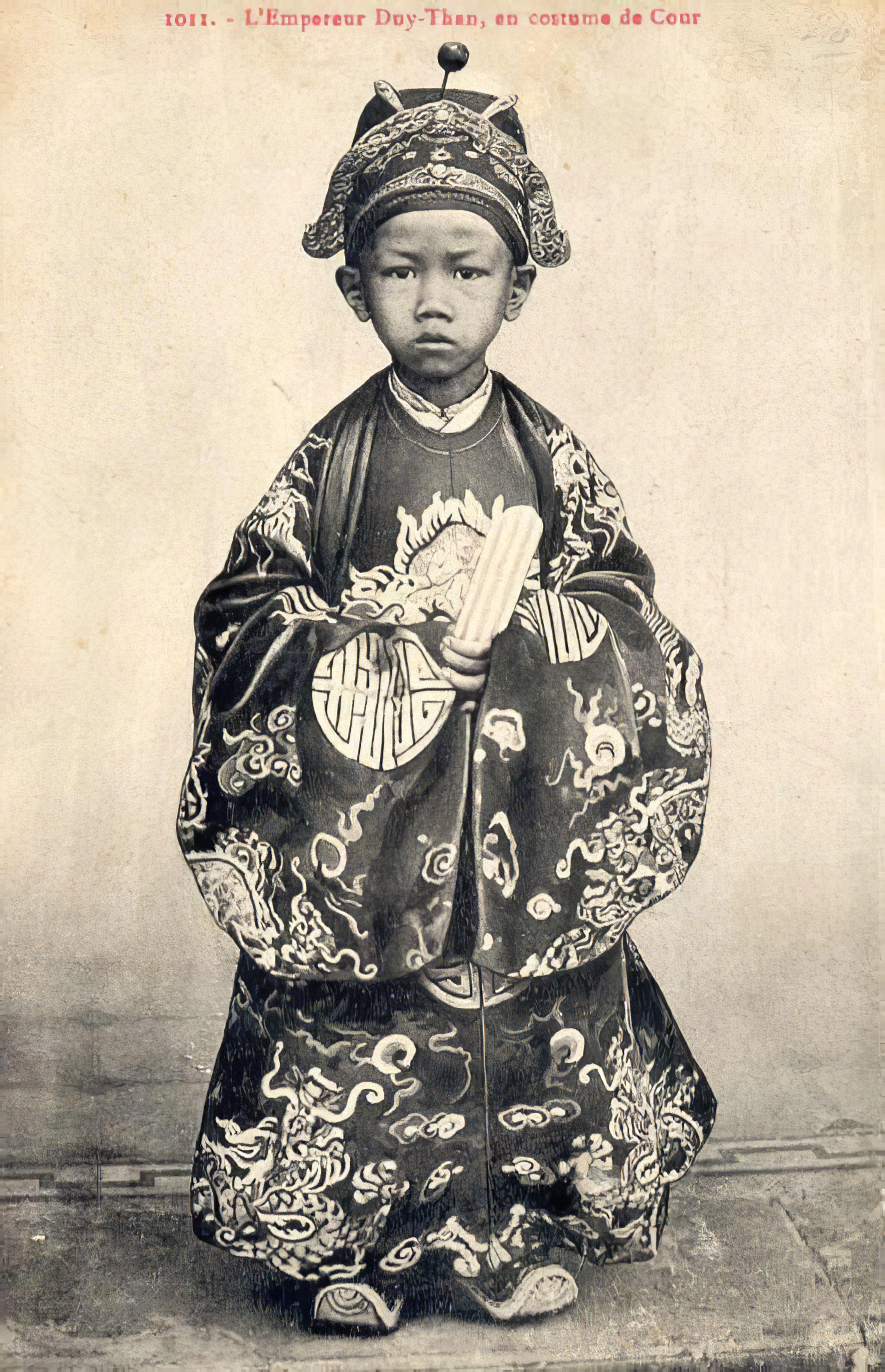
- The last emperor of Vietnam was exiled to Reunion in 1916.

Duy-Tan, Viet Nam's last emperor (photo Wikipedia)

- In 2010 the Pitons, cirques and remparts of Reunion Island became a UNESCO Natural World Heritage Site.

- In 2009 Reunion's maloya music was inscribed on UNESCO's Representative List of the Intangible Cultural Heritage of Humanity.

- At Reunion the pirates John Taylor and Olivier Levasseur are reputed to have captured the most valuable prize in pirate history variously described as "Nostra Senora della Cabo", "Nostra Senhora do Cabo", or "Nossa Senhora do Cabo" (Our Lady of the Cape) a 700-ton Portuguese galleon. It had been damaged in an Indian Ocean storm and was undergoing repairs at Réunion when the pirates struck. The galleon was laden with silver, gold, diamonds, gems, as well as pearls, silks, spices, works of art, and church regalia, the total value of which has been estimated as being anywhere from £100,000 to £875,000 (more than $400 million in today's terms).

- Reunion grows Bourbon Pointu, commonly said to be one of the world's finest arabica coffees - although that's  a matter of personal opinion of course! One kilo can cost up to €600 in Japan.

- A cricket on Reunion has been found acting as a plant pollinator for the first time in the world (see also here).

Raspy cricket (Photo: Micheneau and Fournel / RBG Kew)

Friday, September 9, 2011

VolunTourism Defined: 
"The conscious, seamlessly integrated combination of voluntary service to a destination and the best, traditional elements of travel — arts, culture, geography, history and recreation — in that destination". 
From www.voluntourism.org 

Have you ever wanted to "give something back" while travelling? Feel like immersing yourself in another culture while bringing about some positive change in the world? A phenomenon not just limited to kibbutz workers or gap year students, people of all ages and abilities can participate in what can be a life-changing and highly rewarding experience – volunteering while on holiday. Whether you have just a few days or several months to spare somebody somewhere could benefit from your time, your skills, your energy and enthusiasm. 

Maybe you've been moved by the plight of beggars or homeless children during a previous city break. Perhaps you've been inspired while trekking, diving, snorkelling or even just visiting a zoo and would like to help with environmental issues. You might have been touched when seeing a natural disaster unfold on the television. Opportunities abound in domains as varied as healthcare and community development, conservation (land or sea), and teaching or sports coaching, to name just a few. A quick internet search brings up many organisations. Some are free, others ask for donations, and some operate as profitable businesses. They may be faith-based or government supported, and may target seniors or teens. Some place the accent more on the holiday facet, while others will emphasis the volunteering aspect. Some of the best projects will be those where you are simply donating your time and labour and not using your professional skills. 

The choice of place and activity will depend on a number of factors. The amount of time you have available (not much time? – choose a destination close to home); your preference of location (already speak Spanish, want to learn Spanish? why not choose South America); and whether you prefer a foreign-run organisation or a local one (a local organisation might be cheaper, but could be less reliable). Check testimonials from previous volunteers, and/or post a query in a forum to see what people are saying about their experiences. The most expensive options are often the for-profit companies who act as an intermediary and will place you with the non-profit organisation for which you will be volunteering; they will assess your skills, provide orientation briefings and arrange local accommodation. A cheaper option is to do your own research and pick a charity yourself, but smaller scale ones may not have the manpower or the time to help you organise your vacation. An online resource centre like www.idealist.org can help you make informed decisions about volunteering in another country. 

If this all sounds like too much hard work you can always fall back on responsible travel, which supports cultural and environmental protection, equitable benefit sharing, and the alleviation of poverty. You can make a difference while travelling by simply choosing responsible suppliers (hotels, restaurants, cultural activities etc.) who have developed services and products while keeping in mind the conservation of heritage and the empowerment of local communities and disadvantaged groups. A good place to start in the South East Asian region is www.mekongresponsibletourism.org. 

Coming back to voluntourism, how can you justify volunteering in another country when there are so many needs in our own local communities? Taking a break from our normal lives; a need for adventure or a change of scene; cultural curiosity; sharing one's faith or supporting a cause you believe in; and being a cultural ambassador are just some of the many reasons for which people participate in volunteer tourism. You will also learn about local problems from the inside, rather than via the media. But isn't it just a 'guilt trip'? Can such a short stay really help, really make a difference? Maybe yes, maybe not. But you'll probably get even more out of your stay than the locals, and it will likely inspire you to do more volunteering, at home or abroad. 

You may also worry that volunteering abroad can be seen as a modern-day form of colonialism, but think of your time abroad as a partnership and the chance to learn from another community rather than the occasion to impose 'superior' developed world strategies and resources. Be open-minded to other cultures, and realistic about what you can achieve in such a short period of time. And finally, remember – you have as much to learn as you do to give. 

A few useful links:
Go differently (travel company)
Hands up holidays (travel company)
Voluntourism Gal - blog on the voluntourism industry
Wikipedia definition
and many more...

For a list of useful books click here.

Tree-planting in Korea


If you live in Korea and want to travel in the country and volunteer try WWOOF. World Wide Opportunities on Organic Farms is an exchange volunteer system where participants can homestay in exchange for helping the host. Possible all year round, a programme typically lasts 1-2 weeks, but can extend up to several months. WWOOF Korea has been a chapter of the global organisation since 1996. Daily chores may include harvesting produce, weeding and seeding, milking, cleaning animal pens, and digging trenches! http://koreawwoof.com 


making kimchi for charity


This article was originally published in the October-November 2011 issue of SIWA's Discovery magazine (pages 13-14).

Monday, August 8, 2011

If you're planning a trip to one of the countries in the Mekong basin area (Thailand, Vietnam, Cambodia, Laos, Myanmar or the Chinese provinces of Yunnan or Guangxi), or even if you live in the area, here's an interesting link: Responsible Tourism in the Mekong.

The site features responsible tourism operations and operators, and has been developed to complement existing travel guides to the Mekong Region. Designed with the intention of providing mainly independent travellers with a choice of responsible operators who will cater for all their needs: accommodation, activities, sites to visit, restaurants, shops, museums and wellness services, it can also help you find responsible tour operators if you prefer an organised trip.

P.S. Check out the logo!

Wednesday, August 3, 2011


This is one of several e-books written by the same author, and recounts his time spent on Reunion Island (a French overseas department in the Indian Ocean) during the early nineties. It seems to have been written in 1997 in Australia where the author went to live after leaving Reunion, but appears to have only been published (as an e-book) in 2010.

Chapters are short, manageable, and are broadly thematic, and the narrative is not too linear. The author is at his best when describing Reunion's beautiful landscape, scenery and outdoor attractions. However that is where most of the positive points of the book end.

It is littered with punctuation errors and spelling mistakes in English and in French (eg 'messayge') that a simple re-reading and/or use of a spell checker would have eliminated, and I found this distracting.

There are also numerous factual mistakes (calling the French electricity company EDS for example, instead of EDF; confusing the given names of Verges father and son; saying that Tromelin is one of the Mascarene islands instead of Rodrigues); the wrong use of French terms (eg 'octroi mer' instead of 'octroi de mer'; saying that a 'casier judiciaire' (criminal record) is needed when what is actually needed is an 'extrait de casier judiciaire' (proof of no criminal record) !); and debatable generalisations (eg 'St Denis is a largely Muslim town' or 'it is fairly commonplace for [university] lecturers to have sexual relations with their students'). There are also some repetitions (eg the visit of his mother to the island).

All in all this is one of the first books I've read where I felt I should be awarded points for effort (for reading the book) rather than the author !

The author is well-meaning and his appreciation of the island is apparent, (although not immediately), but better fact-checking (a lack of which is inexcusable for any self-respecting self-publisher in the internet age), along with fewer generalisations and less repetition of clichéd opinions would have helped his case (and the island's reputation amongst those non-speakers of French who don't know the island).

P.S. I have not listed all the mistakes and errors in the book as there are far too many for a simple review, I've simply highlighted a few to illustrate my points.


Further reading:

A review from the blog "Around the world in 80 books!!!".

Monday, August 1, 2011

Amsterdam's canal ring is inscribed on UNESCO's World Heritage List

Well, actually only 36 hours as we arrived from Indonesia on Saturday morning and left on Sunday evening, but never mind! 

As we were only staying one night we booked a night at the Citizen M  hotel next to the airport which markets itself as "affordable luxury". The room was quite small but well designed and included a Philips' mood pad. After we'd stayed there I saw it had been voted Trip Advisor's Trendiest Hotel in the World 2011 !

shower, Citizen M hotel, Amsterdam

The day we arrived we were rather tired and the weather was not good - rainy and cold - only 12°C although this was late July. It was very quick and easy to take a train into the city centre from the airport.

main train station, Amsterdam


canals
 Because of the weather we decided to visit something indoors. There were big long queues outside Anne Frank's house, so we chose the Royal Palace Museum. I found it unusual because unlike other countries where royal palaces have been transformed into civic buildings, this building started off as the City Hall 350 years ago before being turned into a royal palace by King Louis Napoleon in 1806.

magnificent central hall


The next day we visited the Rijksmuseum - no photos allowed unfortunately. (Rijksmuseum is the general Dutch name for a state/national museum; used by itself it refers to the main arts museum in Amsterdam). It is currently being renovated until 2013 but it is still possible to visit part of the collection. One of  its most famous paintings, which we were able to see, is Johannes Vermeer's The Kitchen maid:

(c) Rijksmuseum

Afterwards we visited the Rembrandt Museum, which is actually his former house:


Rembrandt was a famous 17th century painter and etcher. 

Rembrandt

Although I like his work one of my favourite etchings in the museum was not actually by him, but by a contemporary named Jan Saenredam:

Sine Cerere et Baccho friget Venus
(Without Food and Wine Love will Freeze)


Suggested reading:

Girl with a Pearl Earring by Tracy Chevalier. Historical fiction about Vermeer's household.


For more of my posts in the "48 hours in..." series click here.

Wednesday, July 27, 2011


The second part of our trip to Indonesia involved a week's scuba-diving at Pulau Weh, a small island off the north west tip of Sumatra.

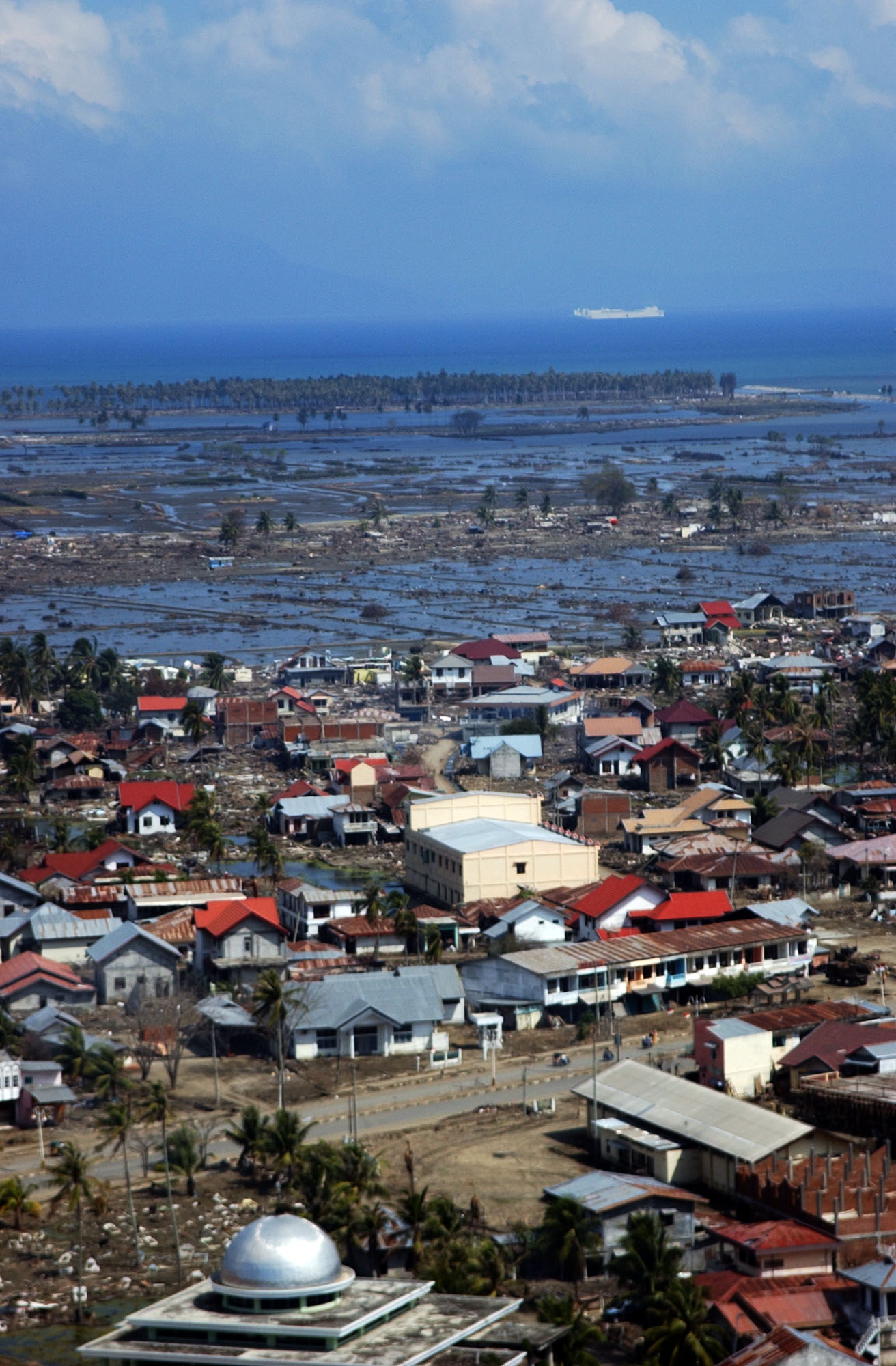
To get there from our previous destination, Yogyakarta, we had to fly to Banda Aceh via Jakarta. Flight and ferry timetables meant we had to spend a night in Banda Aceh before taking the next day's ferry for a two-hour trip to Pulau Weh. Most people know the name of Banda Aceh as it is the city closest to the epicentre of the 2004 tsunami, although you'd be hard put to know it now as much has been reconstructed. 31000 people died on that day.

Banda Aceh, February 2005

A lot of NGOs came to the city in the aftermath, and from a tourist point of view this had the negative effect of driving accommodation prices up artificially - room prices in BA do not reflect quality at all unfortunately!

Ferry from Banda Aceh to Sabang, capital of Banda Aceh

Map of Pulau Weh, showing dive sites

The ferry arrives at Balohan. Our dive club was situated at Gapang.

our dive club

It's a very quiet and idyllic location. We stayed in accommodation belonging to the dive centre, but there is other accommodation too. We had a choice of rustic eating places for our various meals:

breakfast

lunch

another lunch option

tuna sandwich - made with fresh tuna!

our favourite dinner restaurant

freshly caught dinner!

Gapang Bay

looking to the island from out in a dive boat

One of our dives was on a tugboat wreck in Sabang harbour:

tugboat wreck

On the way back we stopped at some hot springs bubbling up from the sea floor in Pria Lot Bay:

another reminder of local volcanic activity
Here's some of the aquatic life that we saw on other dives (note that all photos with a date encrusted on them were taken by Rob Taylor (thanks Rob!)).

moray eel with attendant cleaner shrimp
not sure whether this is a green or hawksbill turtle

sea anemone

group of garden eels

clown fish in sea-anemone

This sea star looks striking but is actually quite harmful to the coral reefs - it's a crown of thorns, the second largest sea star in the world:

this type of sea star destroys the coral reef

On our last day we couldn't dive as it was a Friday and to respect local Muslim custom no boats go out diving or fishing. So we hired a scooter and visited some of the rest of the island.

vegetation, island interior

monitor lizard

Not far from Gapang is Indonesia's northernmost point, which is marked by a commemorative monument.

Indonesia's Point Zero

It's guarded by a group of aggressive monkeys, who are not above stealing anything they can get their hands on.

a few of the thieving monkeys

Thankfully we also met some nice locals!

visitors from Banda Aceh

Suggested reading:

A Diver's Guide to Reef Life by Andrea and Antonella Ferrari. A photographic field guide describing 1200 species of fish and other aquatic life that live on and around the world's coral reefs.

Suggested listening:

Here's an excerpt about Aceh on the BBC's From Our Own Correspondent October 25th 2011 programme.